Thursday, June 20
Today, we decided to stay close to home; that is, within a few metro stops of our Airbnb. Tokyo is huge, so this means that we hardly even moved relative to the Imperial Palace and the rest of the city.
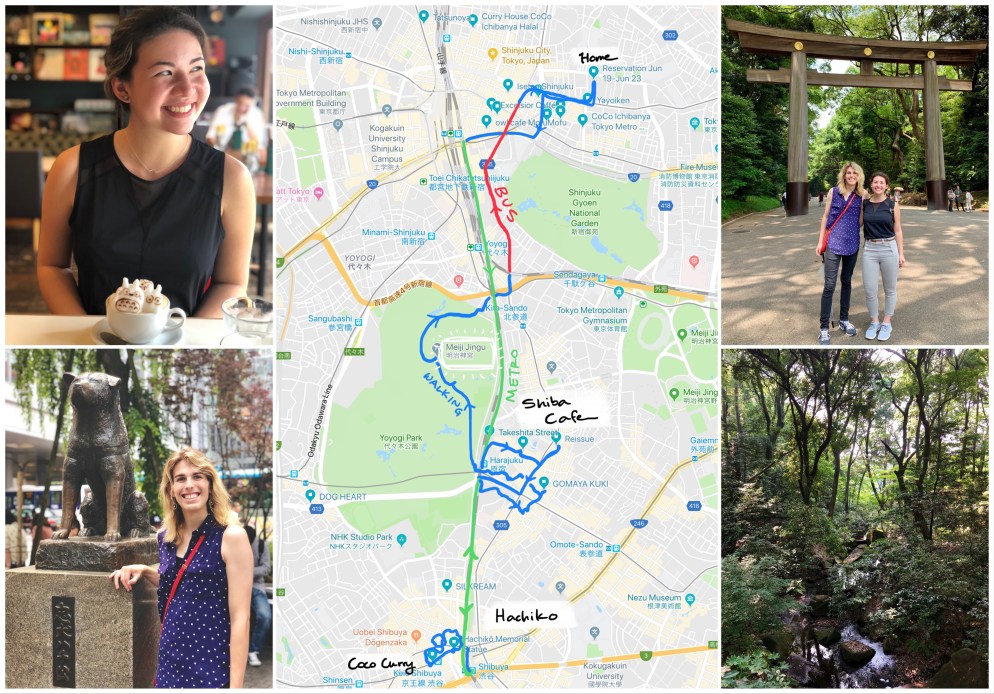
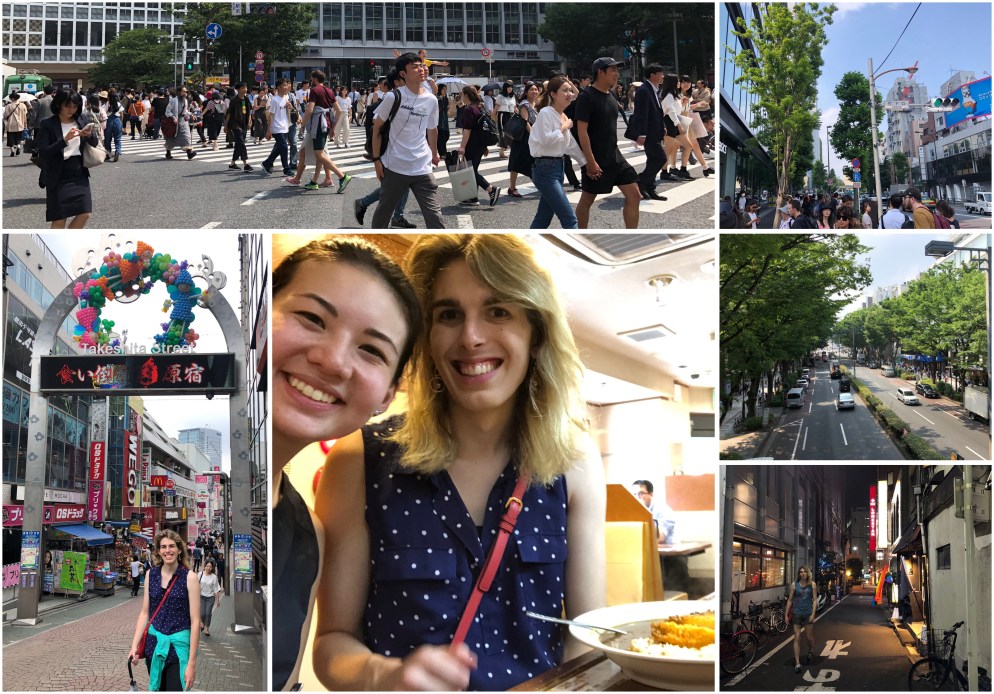
We started with the Shiba cafe we’d been eyeing (see other post). Huge success. The cafe was on the third floor of a building on Takeshita Dori (street), which certain travel sites claim is full of “many trendy shops, fashion boutiques, used clothes stores,” etc. To us, it just looked like a touristy street full of overpriced, incredibly low-quality clothing and souvenirs, but we aren’t really fashion shoppers so maybe we overlooked some hidden gems. We were there for the shibas, anyway.
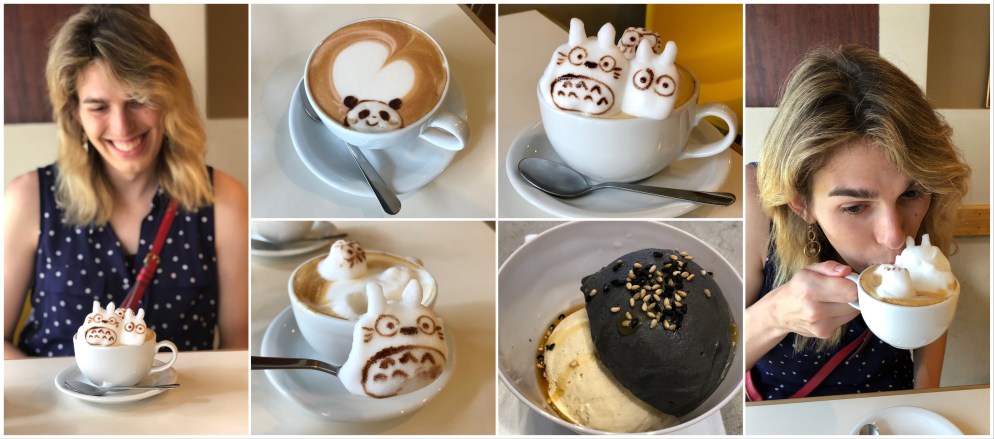
Reissue Latte Art and Black Sesame Ice Cream
I’d compiled a list of little places to stop by if we were ever in the area, like cafes, small museums, and restaurants. (It’s really hard to get a sense of geography until you’re in the city itself!) After the shiba-bonanza, we wandered over to Reissue Cafe, which specializes in cute latte art. The place required that all patrons order at least one drink (hence the little panda), but everything was decently priced given that it caters to tourists. We felt so bad eating the Totoro. Later in the day, we looped back to Gomaya Kuki, which specializes in sesame ice cream. The scoops pictured below are “rich black” and “rich white” (they also offer “triple rich” of each). I kid you not that this is now my all-time favorite ice cream.
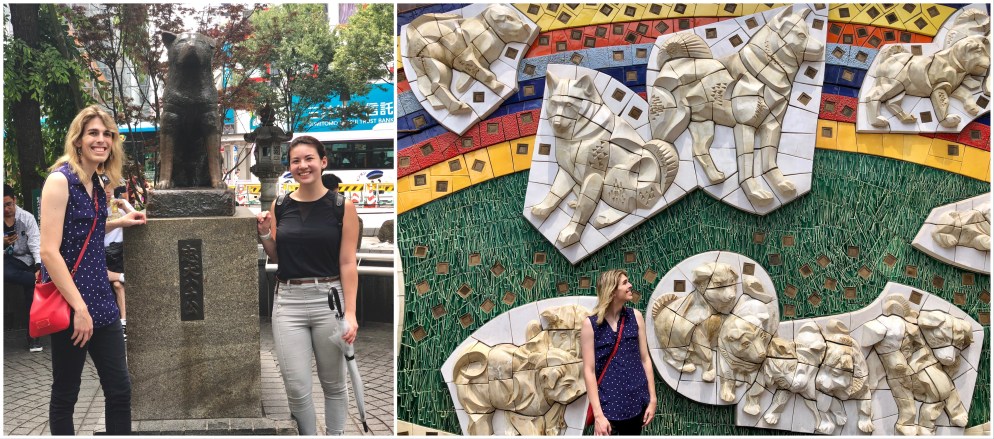
Hachikō 😥
It was around 75ºF and very humid, so we took the metro (instead of walking the very walkable walk) one stop down to Shibuya, where the Hachikō Memorial statue watches over the station. I haven’t seen the Japanese movie or the Richard Gere adaptation because I just never feel like spending an evening bawling, but the gist is that there was this dog who loved his human and would meet him every day at Shibuya Station after work. When the dude had a fatal brain hemorrhage at work and never returned, Hachikō didn’t stop visiting the station every day… he just kept going and waiting for his person until he died. Jesus Christ.
I know we seem Shiba-obsessed but Hachikō was actually an Akita, folks.
Yoyogi Park and Meiji Jingu
There are some gorgeous, big green spaces in Tokyo, and Yoyogi Park is one of them. It’s home to a lot of cute, meticulously preserved attractions, but the main feature is Meiji Jingū (Meiji Shrine), a Shinto shrine which was finished in 1920 (rebuilt again after WWII) and dedicated to Emperor Meiji and Empress Shoken. As the name implies, Emperor Meiji was guy who presided over the Meiji Restoration which, to my limited historical understanding, put an end to the Tokugawa Shogunate and transitioned Japan from a feudal social/economic system to a modern market society.
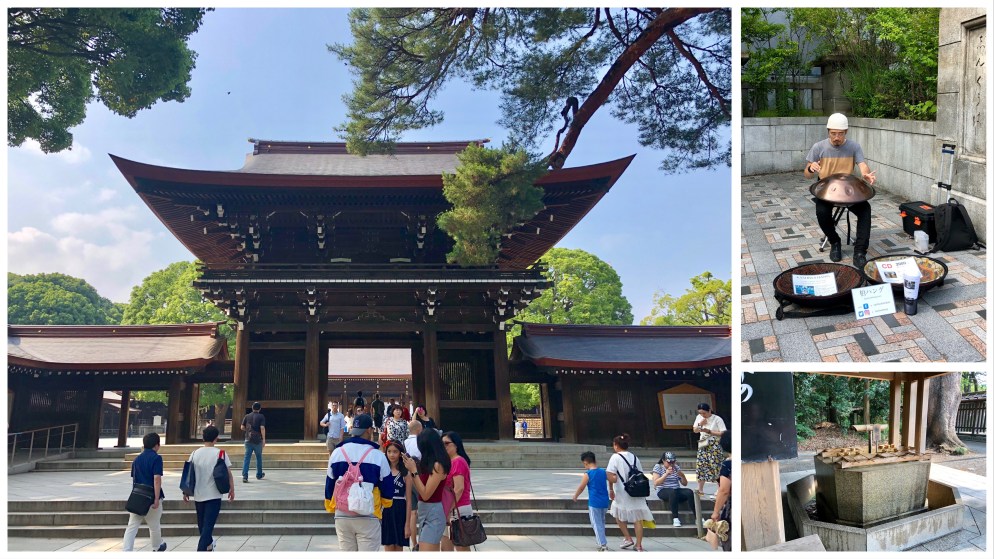
(Sorry that the pictures are included as collages. WordPress is such a struggle.)
The bottom right image above is a chōzuya or temizuya, which means a little pavilion used for water purification at Shinto shrines (and sometimes Buddhist temples?). There’s this process in which you use ladles and the running water to cleanse your left hand, then right hand, then mouth, then left hand, then ladle (or some combination of these actions) before you enter the shrine. I tried to follow this while we were at Meiji Jingū, but I couldn’t quite figure out if the mouth step was supposed to involve actually drinking from the ladle or just awkwardly pouring water over your face, and I felt very much the gaijin trying to partake in something I don’t have a claim over. (I haven’t attempted it since.)
Goshuin and Goshuin-Cho
Meiji Jingū was also the first opportunity for me and Jane to start collecting goshuin, which are artistic combinations of stamps and calligraphy that are unique to a shrine or temple. Goshuin are compiled in goshuin-cho, which are special accordion-style notebooks designed for the little art pieces. Only monks (?) of the temples or shrines can prepare goshuin, and they will not write them into other kinds of notebooks.
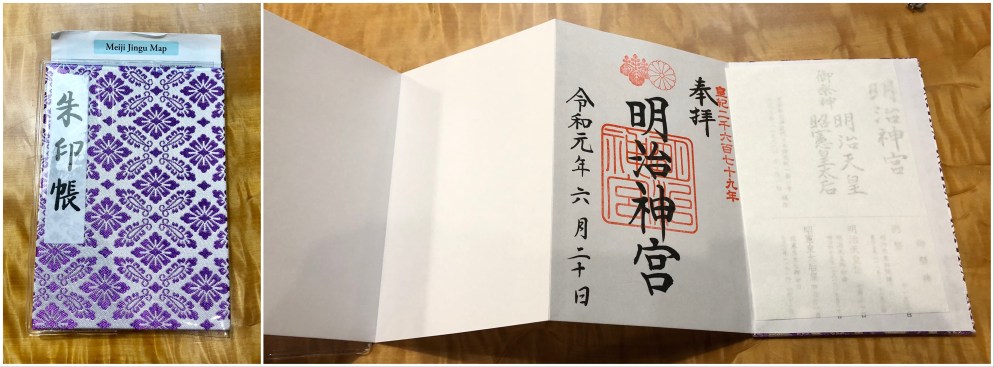
Goshuin normally require another kind of offering (between ¥300 and ¥500), and feel a little commercialized at big shrines where goshuin-writing tables or windows attract long lines. (Later, we saw a woman at Toshogu Shrine drop off like fifteen goshuin-cho for the monks to deal with!) You can purchase the books at any shrine that offers goshuin, and the covers of the books sometimes relate to the shrine they came from. We ultimately decided to use a different goshuin-cho from this first one we received (gasp! Sacrilege!), but it was still quite special.
Japanese Curry and Ichiran Ramen
We also checked off two of our Japanese chain must-eats:
- Curry House CoCo Ichibanya, which sells cheap and delicious Japanese curry with an assortment of meats, stocks, and spice levels. You eat at a long bar facing the chefs, like many restaurants in Japan. Delish.
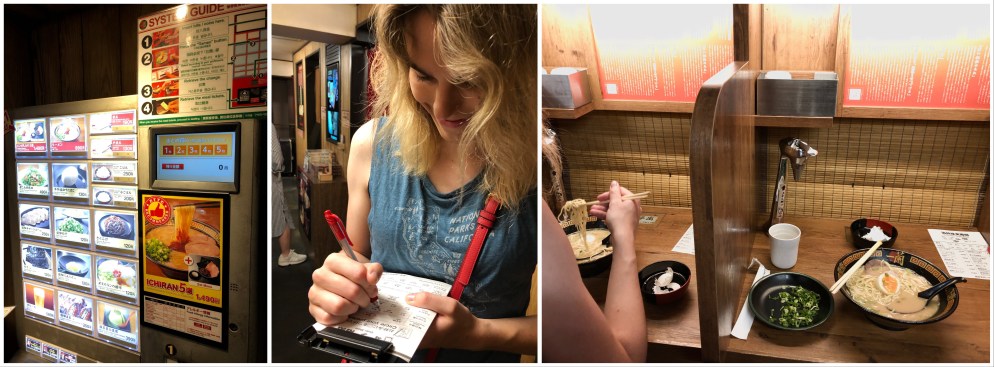
- Ichiran Ramen, which is this whole thing that everyone talks about on Japan travel forums. It’s single-booth dining, supposedly designed for Japanese schoolgirls who didn’t want to interact with people while dining or allow anyone to see them eat. (Seems a little like treating the symptoms instead of the root of the issue, but maybe I just don’t understand Japanese culture.) You order from and pay at a vending machine which spits out a ticket, select a vacant booth from another machine, hand the ticket to a chef whose abdomen is visible through a small window at the back of the booth, and receive your ramen. We went to the Ichiran in Shinjuku, though, which was so popular that it involved lots of face-to-face contact with employees: managing the line out front; ushering patrons into either the basement or the 6th floor dining room based on availability; helping people select extras on a form in addition to the ticket; showing us to our seats. All of the direction kind of spoiled the I’m-shy-and-don’t-want-to-see-anyone feel, but the ramen was still pretty good!
More Shibuya
Turns out that the crossing outside Shibuya Station (and near Hachikō) is actually really famous for its wide crosswalks and heavy foot traffic. We almost didn’t notice because it feels like every intersection is like that! There’s a strong commuter culture here and most businesspeople take trains to work when possible. Every major crossing is a flurry of white shirts and black business pants. Shibuya Crossing in particular also has a high level of tourist traffic.
 The Wild Blue Yonder